ASME B16.34 Compliance: A Buyer's Checklist
ASME B16.34 compliance requires verifying the valve body's pressure rating, material certifications, and manufacturer's quality control records. This checklist helps procurement teams confirm that the supplied equipment meets code requirements before delivery.
- Request mill test certificates for all alloy components to verify material composition.
- Confirm the pressure rating matches the specific flange class and temperature.
- Verify the manufacturer holds valid factory inspection programs for pressure testing.
- Cross-reference the nameplate data with the commercial order specification.
- Check for third-party inspection reports if the project requires external verification.
Why ASME B16.34 Compliance Matters for Buyers
ASME B16.34 is the American Standard for flanged and threaded valve bodies. It covers the requirements for design, fabrication, and testing of pressure-retaining valves. For procurement teams, the standard is the baseline for ensuring the valve can handle the intended service conditions.
Ignoring these requirements leads to field failures. A valve that passes visual inspection may still fail if the pressure rating does not match the operating temperature. The standard requires specific testing protocols and material certifications that a generic “quality valve” label does not guarantee.
This checklist is designed for the buyer. It outlines the documents and verification steps needed before the valve leaves the supplier’s factory.
Verifying Pressure Ratings and Flange Compatibility
The first point of failure in many procurement processes is a mismatch between the valve body and the piping system. ASME B16.34 defines specific pressure ratings based on flange class and material. You must confirm that the supplier has calculated the rating for the actual operating temperature, not just ambient conditions.
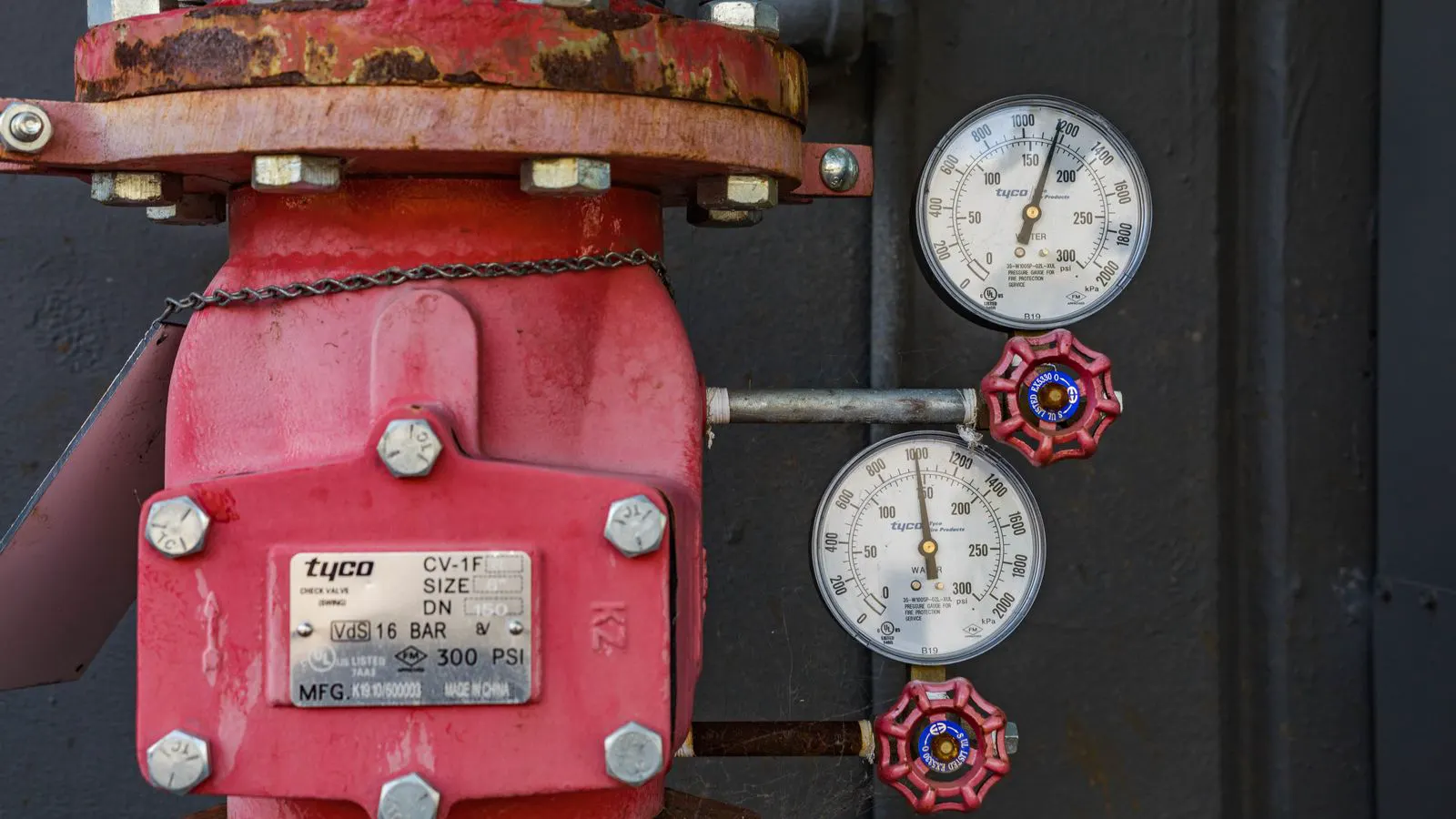
Check the valve nameplate against the commercial order. The nameplate should show the flange class, the body material, and the pressure rating.
- Confirm the flange class (e.g., Class 150, Class 300, Class 600) matches the piping specification.
- Verify the pressure rating is listed for the maximum operating temperature.
- Check if the valve is rated for vacuum service if required.
- Ensure the body material is compatible with the flange material for bolting.
Red flag: The nameplate lists a pressure rating without specifying the temperature. Standard practice requires a temperature basis for the rating.
| Flange Class | Common Pressure Ratings (Water, 100F) | Typical Application |
|---|---|---|
| Class 150 | 150 psi | Low pressure, non-critical service |
| Class 300 | 300 psi | General industrial service |
| Class 600 | 600 psi | High temperature, high pressure |
| Class 900 | 900 psi | Severe industrial and power service |
| Class 1500 | 1500 psi | Critical, high-intensity service |
Material Certifications and Traceability
Material compliance is the second pillar of ASME B16.34. The standard requires that the valve body and internal parts be made from approved materials. For carbon steel, low alloy steel, stainless steel, and other alloys, you need proof of composition.
Request Mill Test Certificates (MTCs) or Heat Numbers for the body and trim. These documents come from the steel mill or the valve manufacturer’s raw material vendor. They confirm the chemical and mechanical properties of the material.
- Request MTCs for the body material.
- Request MTCs for the seat, plug, and stem materials.
- Verify the heat numbers on the valve body match the MTCs.
- Check for radiographic testing (RT) reports if the body is thick-walled or high-integrity.
Red flag: Generic MTCs that do not list specific heat numbers or lack the signature of the material certifying body. If the supplier cannot provide traceable material data, the valve fails the material compliance check.
Factory Inspection and Testing Protocols
ASME B16.34 requires specific hydrostatic testing of the valve body. The test pressure is typically 1.5 times the design pressure at the test temperature. The standard also distinguishes between “in-service” testing and “factory” testing.
The buyer needs to verify that the supplier performs these tests under a controlled quality program. Ask for the test records. The report should list the test pressure, the duration of the hold time, and the result.
- Request the hydrostatic test report for the specific valve serial number.
- Verify the test pressure used matches the calculated requirement.
- Check if the test was performed with the valve in the correct configuration (e.g., open or closed).
- Ask for the nameplate pressure rating to be stamped only after the test is passed.
Red flag: Test reports that are generic and not linked to specific serial numbers. A test report that says “all valves passed” without individual data is not sufficient for a critical application.
Third-Party Inspection and Certification
For critical projects, manufacturers often engage third-party inspection agencies. These agencies verify that the valve meets the ASME B16.34 requirements independently of the manufacturer. The buyer should request the inspection agency’s report.
The report will detail the inspection activities performed, such as dimensional checks, material verification, and final hydrostatic testing. It serves as an additional layer of assurance beyond the manufacturer’s self-declaration.
- Identify if the project specification requires third-party inspection.
- Request the inspection agency’s report for the specific valve.
- Verify the report covers all mandatory inspection points.
- Confirm the agency is recognized by the relevant industry bodies.
Red flag: A supplier that resists providing third-party inspection data for high-value or high-risk valves. This can indicate a lack of confidence in their quality control process.
Common Procurement Mistakes to Avoid
Even with a clear checklist, buyers make errors that compromise compliance. The most common issue is accepting a valve based on a generic specification sheet rather than a specific commercial order.
- Specifying flange class without temperature: The pressure rating changes significantly at high temperatures. Always specify the operating temperature.
- Ignoring the seat material: The seat is often a different material than the body. Verify the seat material is compatible with the fluid service.
- Skipping the nameplate check: The nameplate is the primary record of compliance. Do not rely on the packing slip.
- Accepting non-traceable materials: Always require heat numbers and MTCs.
- Neglecting the test report: The hydrostatic test is the final proof of pressure integrity.
Final Verification Steps Before Acceptance
Before you sign off on the delivery, run through this final audit. Compare the received valve against the commercial order. Check the nameplate, the test report, and the material certificates.
- Nameplate matches the commercial order (flange class, material, rating).
- Hydrostatic test report is present and specific to the serial number.
- Material certificates (MTCs) are present and match the heat numbers on the valve.
- Third-party inspection report is available if required.
- Packing and shipping documents are complete and accurate.
If any of these items are missing or inconsistent, reject the valve or request a formal non-conformance report. Do not accept a valve that cannot be fully traced to its compliance records.
Conclusion
ASME B16.34 compliance is not a single document. It is a chain of evidence. The buyer must verify that the pressure rating, material quality, and testing protocols are all documented and consistent. By following this checklist, you protect your asset from premature failure and ensure the valve performs as specified in the commercial contract.
Frequently asked questions
What is the difference between a nameplate and a test report?
The nameplate is a physical label on the valve showing its specifications. The test report is a document proving the valve passed hydrostatic testing. Both are required for compliance.
Can I accept a valve without a third-party inspection report?
Yes, for standard applications. However, for critical or high-integrity service, third-party inspection is often required by the project specification to provide independent verification.
How do I verify the pressure rating for high-temperature service?
Request the pressure rating calculation from the supplier. The rating must be based on the specific operating temperature and body material, not just the flange class.
What if the material certificate is missing?
Reject the valve. Without a material certificate, you cannot verify the composition of the body or trim. This is a critical compliance failure.
Is ASME B16.34 the only standard I need to check?
No. Depending on the application, you may also need to check ASME B16.5 for flanges, API 6D for process valves, or CE marking for European export.